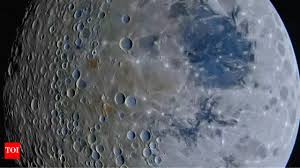
India’s space agency, ISRO, confirmed that the Pragyan rover from its recent Chandrayaan-3 mission has detected water molecules in the lunar soil at the moon’s south pole. The discovery is a watershed moment for lunar exploration, raising prospects for future moon bases and in-situ fuel production for interplanetary missions.
The Science
The rover, operating since its soft landing in August, utilized a suite of infrared spectrometers to analyze regolith samples. Data show clear signatures of H2O, along with hydrated minerals, for the first time outside NASA or Chinese missions. Indian scientists hailed the finding as proof of India’s maturing space science program and its capacity for complex planetary research.
Global Importance
NASA, ESA, and Russian space agencies have all renewed interest in cooperative lunar exploration, while industry analysts predict a “moon rush” for resources may accelerate in the coming decade.