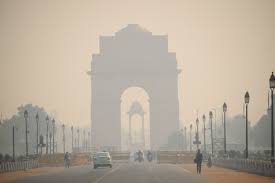
Delhi continued its gasping struggle against toxic air on Wednesday, with the city’s Air Quality Index hovering in the ‘poor’ to ‘severe’ range as stubble burning and meteorological conditions conspire to create a public health crisis in India’s capital.
According to the Central Pollution Control Board, the overall AQI stood at 230 on Wednesday morning, marking marginal improvement from Tuesday’s dire readings but still far from safe levels. Several monitoring stations, however, told a grimmer story—Holambi Khurd Village recorded 410, Ghaziabad 408, and Bawana 328, placing these areas in the hazardous ‘severe’ category.
Areas like ITO and Akshardham reported readings of 281 early Wednesday, indicating persistent severe pollution in multiple pockets of the city.
The Post-Diwali Pollution Pattern
Delhi has endured three consecutive days of “very poor” air quality since Diwali on October 20. The festival marked the beginning of a months-long struggle against accumulating pollutants, exacerbated by seasonal factors including cooler temperatures and reduced wind speeds that trap harmful particles close to the ground.
Meteorologists attribute the current crisis to a western disturbance that has suppressed wind movement, creating ideal conditions for smog accumulation. Experts warned that a fresh smog build-up could intensify around November 5 due to continued stubble burning in neighboring Punjab and Haryana, despite reductions compared to previous years.
Stubble Burning Declining, But Still a Major Factor
The Commission for Air Quality Management reported that stubble-related farm fires have declined this season. Between September 15 and November 3, Punjab logged 2,518 farm fires versus 4,132 in the same period last year, while Haryana saw 145 fires, down sharply from 857. Authorities inspected over 2,200 fields and imposed environmental fines totaling ₹55.75 lakh on violators.
Yet this progress remains insufficient to prevent the current crisis.
A National Problem Deepening
A recent report by the Centre for Research on Energy and Clean Air painted an alarming national picture. October 2025 data revealed sharp air quality deterioration across India, with NCR cities dominating pollution rankings. Dharuhera in Haryana topped the list as India’s most polluted city, enduring two “severe” and nine “very poor” days. Delhi ranked sixth overall, with PM2.5 concentrations three times higher in October than September.
Health Emergency Demands Action
The persistent pollution has triggered significant health concerns. Air pollution was responsible for nearly 15% of all deaths in Delhi in 2023, making it the city’s single largest health risk. The worsening air has already prompted families to consider relocating to cleaner cities, and medical professionals have urged residents to limit outdoor activities during morning and evening hours when pollution peaks.
Schools have introduced precautionary measures including air purifiers, outdoor activity restrictions, and mask distribution. Old-age homes have similarly implemented indoor air quality improvements.
Government Measures Underway
The Public Works Department plans to install automatic mist spraying systems on three major road stretches—Narela, Bawana, and Jahangirpuri—identified among Delhi’s top 13 pollution hotspots. The project, costing ₹4 crore, will spray RO-treated water to suppress dust, with a capacity of 2,000 litres per hour.
As winter deepens and farmers in neighboring states continue harvest season, Delhi residents face weeks of hazardous air ahead unless urgent policy measures are intensified.